
You can slow your breathing to calm the body and reduce physical stress responses. When you exhale longer than you inhale, your heart rate variability rises and your autonomic balance shifts toward the parasympathetic system. Paced breathing around five to six breaths per minute dampens sympathetic activity and stabilizes baroreceptor signaling, helping you recover faster from stress. With consistent practice and nasal airflow when possible, you may gain tighter regulatory control—yet the best approach depends on how your physiology responds to protocol specifics.
Key Points
- Slow breathing activates the parasympathetic system, reducing sympathetic arousal during stress.
- Prolonged exhalation increases breathing-dependent heart rate variability, signaling greater resilience.
- Paced breathing at ~5–6 breaths per minute dampens cardiovascular responses to stress tasks.
- A slower breathing pattern improves baroreceptor signaling and stabilizes hemodynamics under stress.
- Regular daily practice reinforces the parasympathetic shift, improving recovery after stress exposure.
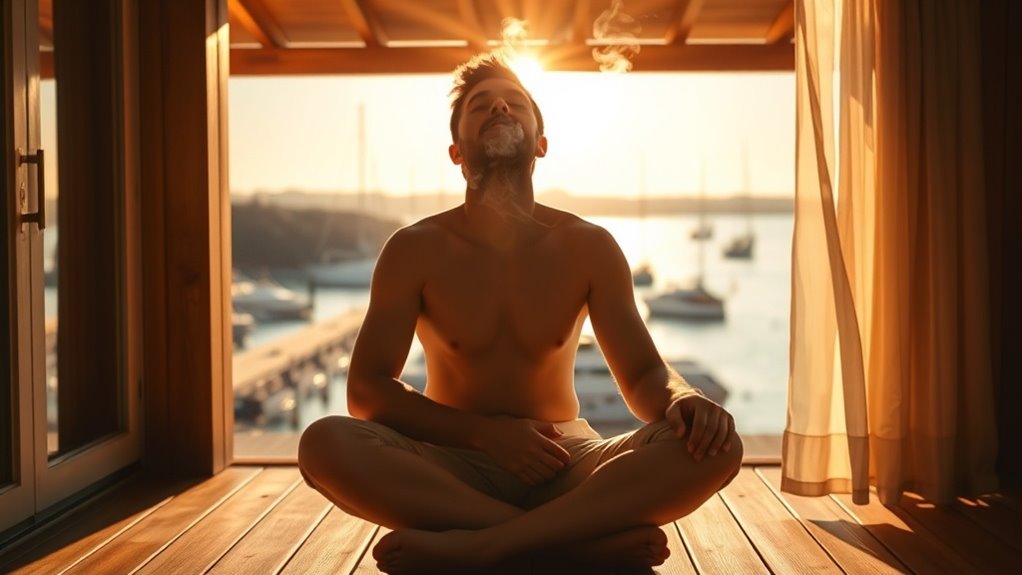
Slow breathing techniques can meaningfully blunt the body’s response to stress by activating the parasympathetic nervous system and reducing sympathetic arousal. You enter a practical frame as you consider how slow breathing shapes stress physiology. In this context, you’ll observe a predictable sequence: decreased heart rate, stabilized blood pressure, and reduced array of autonomic warnings when you regulate nasal inhalation and exhalation. The mechanism rests on altering vagal tone and shifting the autonomic balance toward parasympathetic dominance, thereby dampening the fight‑or‑flight response.
Slow breathing dampens stress by boosting parasympathetic tone and easing autonomic arousal.
When you practice slow breathing, you influence the breathing cadence in a way that reshapes physiological signals. A deliberate, extended exhale tends to increase respiratory sinus arrhythmia, which reflects greater heart rate variability and resilience to perturbations. You’ll notice calmer sensations as baroreceptor activity aligns with the slower rhythm, yielding smoother hemodynamic responses during stress. This adjustment manifests in measurable changes: lower sympathetic nerve activity and more stable cortisol release patterns across repeated stressors. In practical terms, the technique acts as a regulator, not a cure, by reducing the magnitude of autonomic surges you otherwise experience.
From an evidence perspective, you don’t have to rely on anecdotes alone. Experimental data show that paced breathing at roughly five to six breaths per minute produces consistent reductions in sympathetic markers and perceived stress. You may compare conditions with spontaneous breathing and observe a dampened cardiovascular response to mental arithmetic tasks, public speaking simulations, or other acute stressors. While the magnitude of change varies, the directional effect—lower arousal accompanying slow breathing—appears robust across populations and task types.
In implementing slow breathing, you adopt a practical protocol: inhale for a count of four, exhale for a count of six to eight, with nasal airflow preferred when feasible. You’ll maintain outward breath control without forcing tension, aiming for a comfortable, sustainable cadence. Importantly, you should monitor for dizziness or lightheadedness and adjust tempo accordingly. The goal is consistency over intensity; even modest, regular practice yields cumulative benefits in stress physiology and resilience.
You’re urged to integrate slow breathing into daily routines rather than reserving it for crises. Short, repeated sessions—a few minutes, several times daily—can reinforce the parasympathetic pattern and reduce reactivity to minor stressors. When applied habitually, this approach can lower baseline sympathetic tone and improve recovery after stress exposure. In summary, slow breathing serves as a nonpharmacologic mechanism to modulate stress physiology by shaping breathing cadence and autonomic balance, providing a reliable, evidence-based tool for reducing physical stress responses.
Frequently Asked Questions
How Long Should I Practice Slow Breathing Daily?
You should aim for about 10 to 20 minutes per day. Evidence suggests long-term slow breathing benefits accrue with daily practice, not a one-off session. Start with 5 minutes, then gradually increase as you feel comfortable, up to 20 minutes. Consistency matters more than exact duration. Track how you feel afterward and adjust. Daily practice duration that fits your schedule supports sustained benefits, including autonomic balance and reduced perceived stress.
Can Slow Breathing Help With Anxiety Disorders?
Slow breathing can calm you, yes, and may ease anxiety disorders. You’ll likely notice slower heartbeats and steadier breath as you practice, aligning autonomic balance and reducing arousal. Slow breathing benefits include diminished worry waves and improved emotional regulation, while anxiety mechanisms shift from hypervigilance to calmer appraisal. Clinically, you’ll combine paced respiration with grounding for consistency, though expect individual response variability. Maintain gradual practice, and consult a clinician if symptoms persist or worsen.
Is Slow Breathing Safe During Pregnancy?
Short answer: slow breathing can be safe for many pregnant people when done gently, but you should consult your clinician first. Evidence suggests controlled breathing may reduce stress and support relaxation without harming you or your fetus when practiced at safe rates. Avoid breath holds, and stop if you feel lightheaded, dizzy, or short of breath. If you have pregnancy safety concerns, discuss specific techniques, frequency, and contraindications with your obstetrician.
Do Genetics Affect Responsiveness to Slow Breathing?
You wonder if genetics affect responsiveness to slow breathing, and yes, genetic variability can modulate autonomic responsiveness. Your response may feel variable, but evidence shows some individuals exhibit stronger vagal shifts and cortisol changes. You’ll notice that training tends to harmonize these differences over time. Keep in mind that the mechanism involves autonomic nervous system regulation, with genetic factors shaping baseline reactivity, not necessarily preventing benefits. With consistency, you may still experience meaningful, clinically relevant stress reduction.
Can I Use Apps to Guide Slow Breathing Effectively?
Yes, you can use apps to guide slow breathing effectively. Choose apps that offer paced breathing with gentle pacing and adjustable breath cadence to match your comfort. Look for evidence-backed routines, real-time feedback, and consistency features. Use them regularly, especially during stress, to train your autonomic system. While apps aid practice, maintain proper posture, avoid hyperventilation, and consult a clinician if you have cardiovascular or respiratory concerns. Start with a 4-second inhale, 6-second exhale pattern.