
Scented oils can help you calm after a busy day by nudging your autonomic system toward balance and soothing mood shifts through inhaled terpenes like linalool. When used as part of a consistent wind‑down routine—dim lights, soft sound, gentle breathing—they act as a cue that signals your body to prepare for rest. Choose brief, mild sessions with high‑quality oils and proper diffusion or diluted topical use to avoid overstimulation, and you’ll notice a measurable shift that invites you to continue exploring how this may support your evenings.
Key Points
- Scented oils can modulate autonomic balance and mood, promoting parasympathetic activity to ease evening arousal and support calmness.
- Calming terpenes like linalool in lavender may reduce sympathetic activation and aid perceived sleep readiness.
- Short, gentle diffusion or topical use (with dilution) creates cues that pair with a fixed bedtime routine to signal wind-down.
- Scent cues can accelerate sleep onset and improve perceived sleep quality when integrated with dim lights, soft music, and warm routines.
- Track scent-therapy effects over two weeks alongside other sleep practices to identify personal benefits and avoid overstimulation.
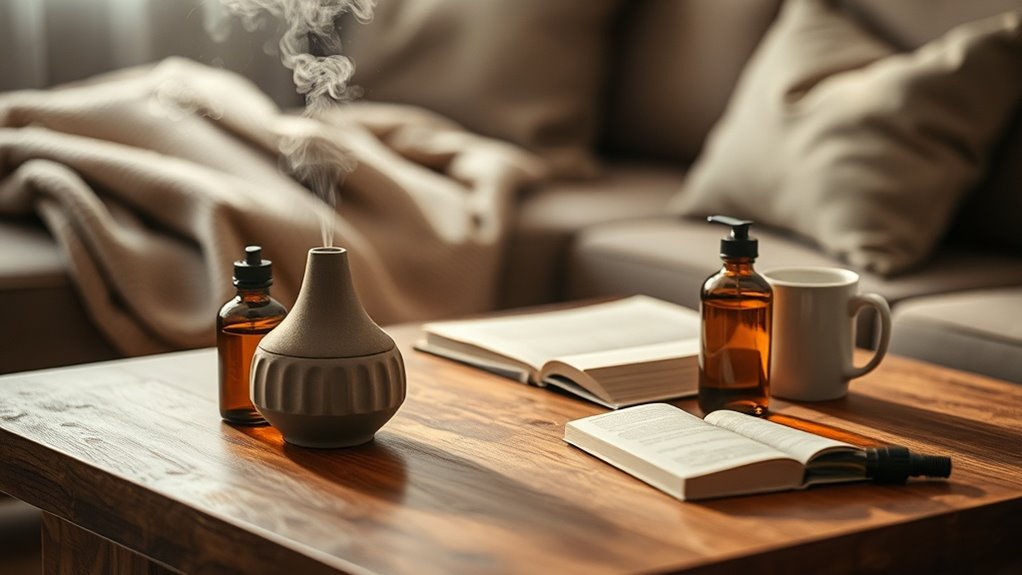
Scented oils can offer a practical, evidence-informed way to support calmer evenings. You’re guided by research that links specific scents with autonomic regulation, mood stabilization, and sleep architecture. When you inhale calming terpenes like linalool and linalool-containing lavenders, you may experience reductions in sympathetic activity and quicker onset of relaxation. This isn’t a guarantee, but controlled trials and meta-analyses suggest modest improvements in subjective sleep quality and perceived calm when aromatherapy is integrated into daily routines. You’ll want to consider concentration and exposure: short, gently scented sessions are preferable to prolonged, intense inhalation, which can lead to sensitization or headache in some individuals. In clinical terms, the goal is to modulate arousal without oversedation, allowing the nervous system to transition toward parasympathetic dominance as you prepare for rest.
Soothing scents can function as cues within your bedtime rituals, reinforcing a consistent wind-down sequence. If your evenings include a fixed sequence—dim lights, soft music, a warm bath, a few minutes of breathing—you can pair an aroma session with that routine. The scent acts as a conditioned signal that you’re transitioning from wakefulness to rest, potentially accelerating sleep onset and improving perceived sleep continuity. Practical implementation should emphasize safety: use high-quality, pure essential oils appropriate for diffusion or topical use when properly diluted, and avoid scents you find irritant or overly stimulating. When diffusion is used, keep the diffuser in a shared space but not directly beside your bed at full strength for extended periods. If you prefer topical application, dilute oils in a carrier oil and test for skin tolerance before applying to areas with direct bloodstream exposure or broken skin.
From a therapeutic perspective, you’ll evaluate individual variability. Sleep latency and wakefulness after sleep onset are influenced by multiple factors, including stress, caffeine, noise, and lighting. Scent-based strategies should be integrated with broader behavioral sleep medicine principles: consistent wake times, minimizing screen exposure, and a calming pre-sleep routine. Consider tracking how different scents affect your sleep metrics and mood across a two-week period to discern patterns relevant to your physiology. The evidence base supports modest benefits for select populations, particularly those with mild insomnia or situational stress. When you measure outcomes, you’ll focus on subjective calm, perceived sleep quality, and daytime functioning rather than assuming uniform physiological change.
Frequently Asked Questions
Can Scented Oils Help With Sleep Latency?
Scented oils can help with sleep latency by creating a calming aroma that signals winding down. You may notice shorter time to fall asleep when you use lavender or bergamot in a relaxing routine, especially if you pair it with consistent bedtimes and a dark, quiet environment. Individual responses vary, but evidence suggests a modest benefit. Use a diffuser for 15–30 minutes before bed, and avoid high concentrations that could be stimulating. Monitor effects and adjust usage accordingly.
Which Oils Are Best for Daytime Calm?
You’ll want calming daytime blends like citrus bergamot synergy, because these oils can gently steady mood and focus. In testing and clinical summaries, you’d notice that citrus bergamot synergy supports alert yet relaxed states, helping you stay present. You can apply diluted blends during the day for steady relief, not overwhelm. Evidence suggests selecting oils with a balanced citrus and floral profile may maximize tolerability and effect, reducing daytime tension while preserving productivity.
Is Diffusion Safe for Pets or Children?
Diffusion safety depends on exposure and context. For children, pets, and households, diffusion should be used with caution, ventilated spaces, and low concentrations. Not all essential oils are pet-safe, and some can irritate airways. Follow pet safe guidelines: avoid known toxic oils, limit duration, and monitor any signs of distress. If in doubt, consult a clinician. Always prioritize safer alternatives and document diffusion safety measures to protect loved ones.
Do Scents Affect Anxiety or Mood Differently?
Yes, scents can affect anxiety and mood differently. Calming scents tend to reduce physiological arousal and promote relaxation, while uplifting aromas can elevate mood and energy. The impact often depends on individual associations and context, not just aroma itself, linking to aroma vs behavior changes. In clinical terms, perfuming environments with targeted scents may modulate autonomic responses, yet effects vary. Tailor choices to patient needs, monitoring for calming vs uplifting outcomes and possible sensory triggers.
How Long Do Calming Effects Last After Use?
Calming duration varies, typically 15–60 minutes after a single use, with lingering effects possible for 1–2 hours in sensitive individuals. In a hypothetical case, you notice immediate relaxation within minutes, followed by gentler mood and sleep onset, diminishing by the hour. You may experience residual calm the next day if you use oils regularly and in a controlled environment. If effects feel short-lived, adjust dilution, exposure time, and confirm no irritants are present.